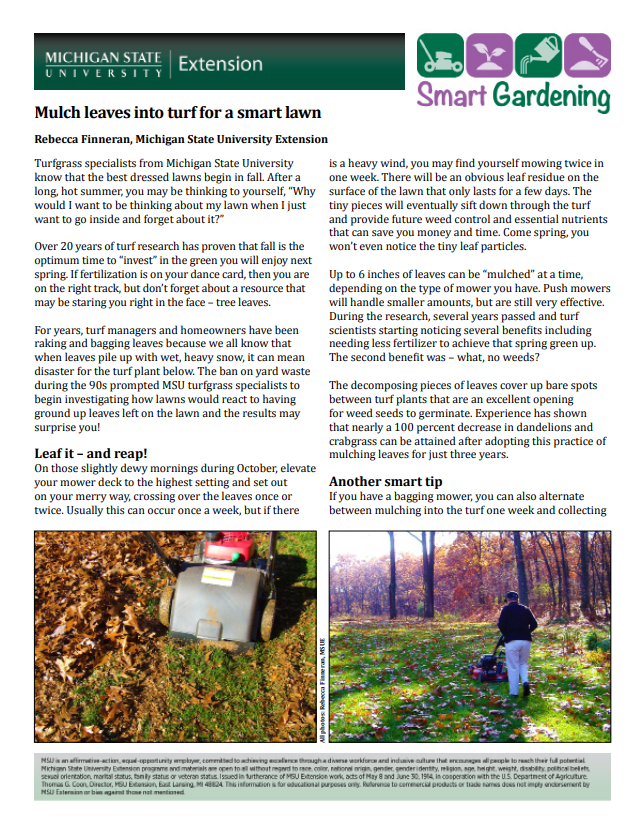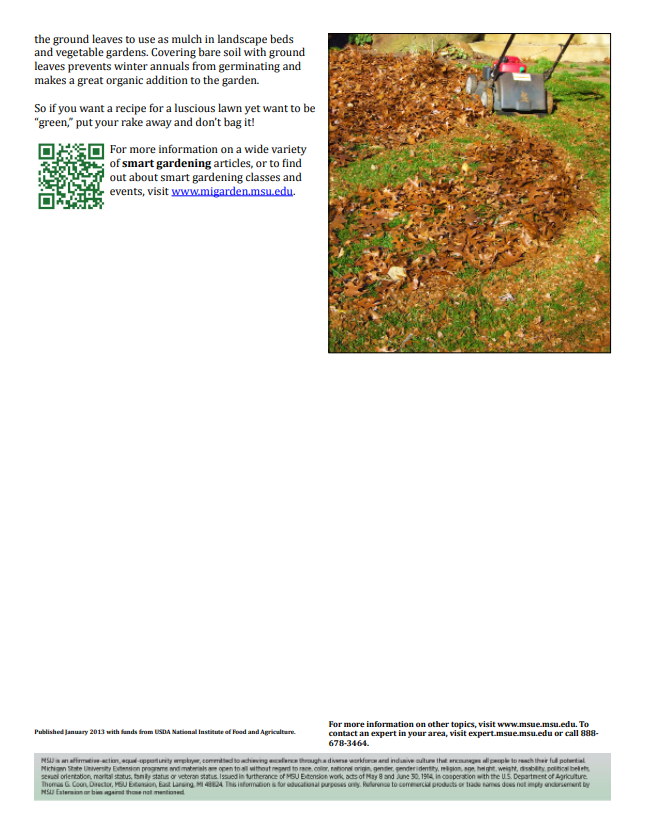
Many homeowners spend hours every fall bagging and raking leaves. Believing a perfectly clean lawn is the healthiest option. While that approach may look neat, it is no longer considered the most earth-friendly or beneficial way to care for turf. A smarter and more sustainable method is to properly mulch leaves back into the lawn. This allows nature to work for you instead of against you.
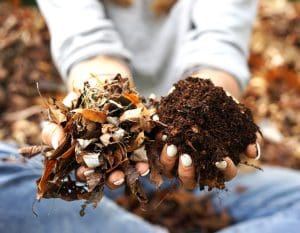
When leaves are chopped finely and returned to the turf, they become a valuable source of organic matter that supports soil biology. Gardeners have relied on leaf debris for decades to build rich, healthy soil, and lawns can benefit in much the same way when the process is managed correctly. Instead of removing nutrients from your property, mulching leaves allows those nutrients to be recycled directly into the soil where grass roots can access them.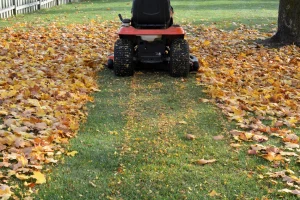
Leaves are not waste; they are stored energy pulled from the soil throughout the growing season. As they decompose, they help improve soil structure, reduce compaction, and support beneficial microorganisms that drive long-term turf health. This biological activity strengthens root systems, improves moisture retention, and creates a more resilient lawn heading into winter and the following spring.
Leaf mulching benefits
Proper leaf mulching is critical to gaining these benefits without harming the grass. The objective is to mow leaves as finely as possible so very little material remains on the surface. During periods of heavy leaf drop, this may require mowing more frequently, making multiple passes, or mowing once and then using a bagger on a second pass to remove excess material. Leaves should always be mulched when dry, as wet leaves tend to clump and can smother turf. A good indicator of proper mulching is being able to see grass blades after mowing.
Leaves and fall granular fertilizer applications
A common question we receive in the fall is whether leaves on the lawn will interfere with fertilizer applications. Light to moderate leaf coverage typically does not prevent granular fertilizer from being applied successfully. When applications are completed in these conditions, any areas with denser leaf cover are gently stirred using backpack blowers to ensure fertilizer reaches the soil surface. This extra step ensures proper nutrient placement while still allowing homeowners to benefit from returning organic matter to the soil. If leaf coverage is too thick to ensure proper fertilizer contact with the soil, applications may be postponed and rescheduled. Homeowners are notified so they have time to mulch or remove excessive leaves before treatment. This approach prevents wasted product and ensures every application delivers full value and results.
Soil health for lawns
Fall lawn care is not just about surface appearance; it is about building a healthy foundation below the surface. When leaves are managed correctly, they contribute to stronger soil biology, improved nutrient efficiency, and a lawn that is better prepared to handle stress and transition into the next growing season. Many spring York County lawn problems can be traced back to fall conditions, making smart decisions now one of the most effective ways to gain a healthier lawn later.