
Crabgrass – the bad and ugly weed!
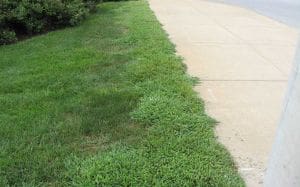
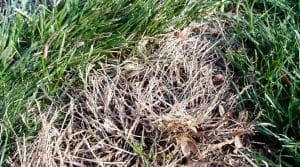
Crabgrass can invade a lawn and landscaping, potentially taking over areas where grass or plants should be growing. This grassy weed has a lifecycle that only lasts one full year. Being a summer annual, means that crabgrass likes to germinate in the spring, mature in the summer months, produce seeds, and die when the first hard frost hits our area.
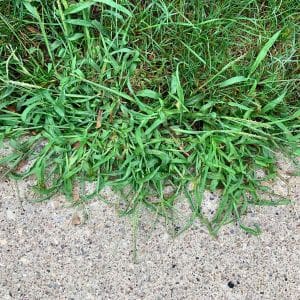
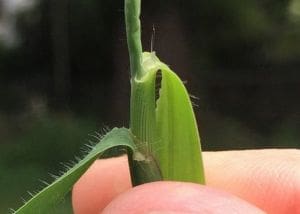
Crabgrass is often a problematic lawn weed in lawns where it wasn’t planted. Crabgrass spreads by seeds in bunch formations and has a light yellowish-green appearance, setting this grassy weed apart from the desired type of grass in your lawn. A key feature for identification of crabgrass is the white ligule (by the folded leaf blade) and spiny looking hairs.
When soil temperatures reach 55 to 60 degrees Fahrenheit, at a depth of 2 inches for a few days in a row, is when most crabgrass seeds begin to germinate. Areas where Crabgrass can first be seen are along driveway edges, sidewalk edges, curb strips and lawn hardpans. These areas capture heat from the sun and will increase soil temperatures rapidly allowing optimal conditions for seed germination.