If you’re noticing some taller, stalkier growth popping up in your cool season lawn right now, don’t panic your grass is simply doing what it’s programmed to do every spring! It’s a response mid spring trigged by a biological reproduction process to maintain its existence.
What’s happening out there?
Cool season grasses go through a natural reproductive cycle each spring, and part of that process is the development of seed heads. Depending on your specific species of grass, you may see these seed heads emerge at slightly different times but it’s all part of the same biological story. The plant transitions from producing a fine leaf blade into forming a thicker, stalkier stem structure that pushes upward to develop and carry seed. This is the grass’s way of reproducing it’s been doing this long before we ever started manicuring lawns!
Will those seeds take over my lawn?
Not a chance. For grass seed to be viable, it needs to remain on the plant for approximately 4 full months to reach complete maturity. The seeds you’re seeing right now are nowhere
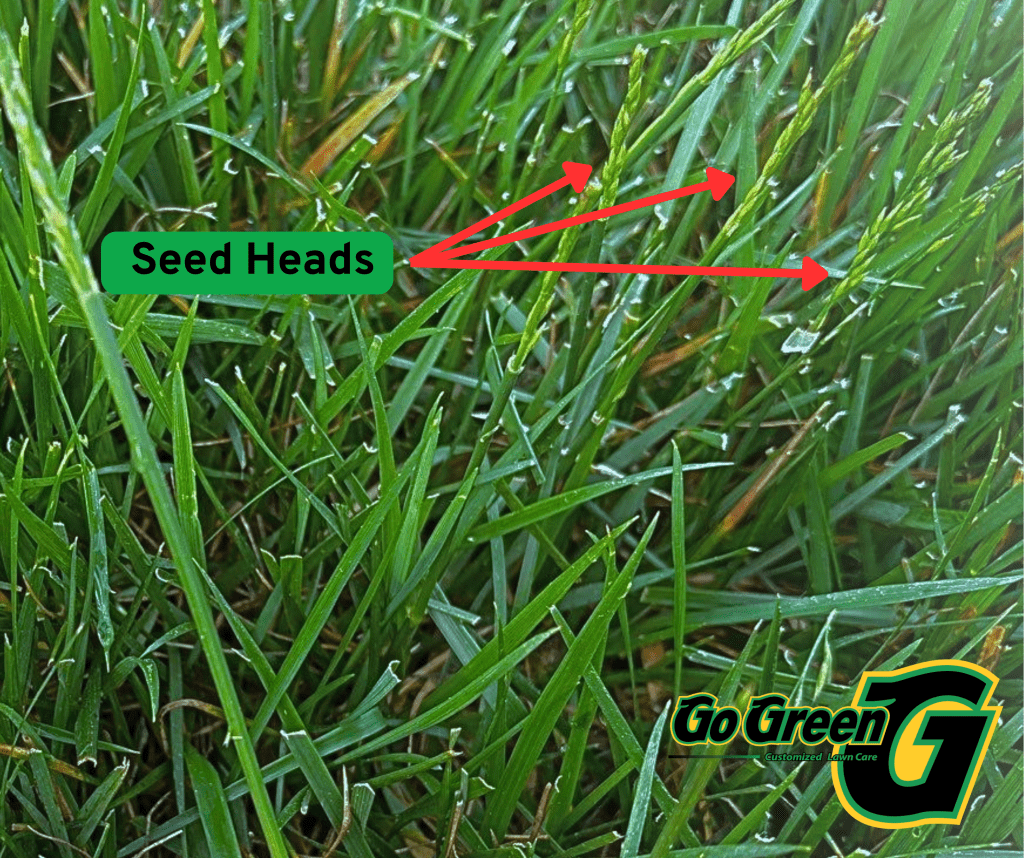
near that point, so there’s no concern about unwanted spreading from spring seed heads.
What does this mean for how my lawn looks?
Because the plant is now in that stalkier, stemmy form rather than its normal fine blade structure, your lawn may appear to lose a little of its rich green color temporarily. This is completely normal. We also want to give you a heads up, mower blades will dull faster during this period. The fibrous, tough texture of the stalky plant is harder on cutting edges than a soft grass blade, so more frequent blade sharpening is part of good spring lawn care right now.
When will it go back to normal?
Here’s the honest answer – it depends! Once the grass completes its reproductive cycle, it has the ability to transition back into producing beautiful, fine leaf blades. But to do that successfully, the plant needs adequate energy and moisture to get through the entire process. How May and June play out in terms of weather, and how well the lawn is maintained during that stretch, will have a big impact on the timeline. In good conditions, you could see things normalize in 4 to 6 weeks. In a more challenging growing season, some lawns may hold that stalky form until fall before fully returning to that lush, fine-bladed look we all love.
What can we control?
Proper mowing practices make a real difference right now. Sharp blades, correct mowing height, and consistent schedules all help the plant move through this cycle as efficiently as possible.
As we always say – It will grow how you mow! We’re out there with you every step of the way this season.