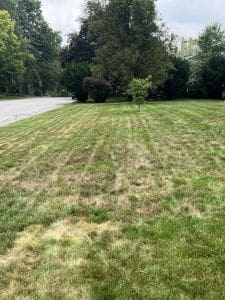
 Lawns were under severe stress with the drought-like conditions, and recent excessive rainfall allowed extra moisture to remain on the leaf tissue during increased temperatures and humidity. These conditions allowed “bad” fungal spores to explode and become invasive.
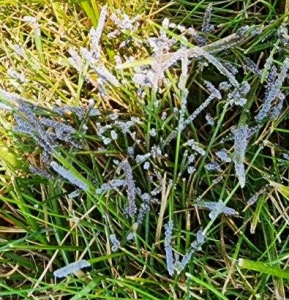
Brown patch, red thread, leaf spot, dollar spot, slime mold, stripe smut seem to be highly active now. Lawns with a mixed stand containing Kentucky Bluegrass and Perennial ryegrass seem to be those with a higher percentage of infection. 99.9% of the active diseases are merely cosmetic.
Go Green Customized Lawn Care recommends:
 1. Reduce mowing as much as possible as it can decrease stress activity. Avoid mowing areas with severe damage. If necessary, mow late evenings just before dusk.
2. Wait for conditions to change and it will disappear. It may take some time, but grass will create new growth and begin to fill in these areas.
3. Water, mornings only, areas that have not recovered from the drought pressure and help strengthen the root systems to outgrow the disease.
4. Application of our custom liquid soil amendment is designed to improve soil health, increase beneficial soil biology, increase nutrient uptake that is naturally existing or what we apply, increase decomposition of thatch & grass clippings into healthy food sources, decrease soil surface tension while increasing water saturation and holding capacity.
5. Fungicide application will aid the spread from becoming worse and help kill the bad fungus. This will give a 21-day protection.
Maintaining a healthy lawn is the best way to prevent disease outbreaks in turfgrass. Lawns require optimum amounts of water, nutrients and beneficial biology to create a favorable environment.